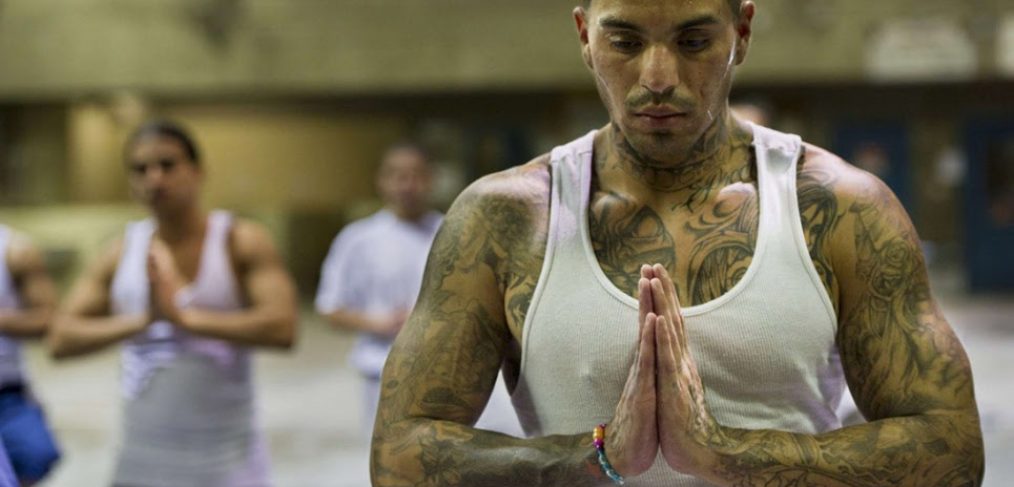
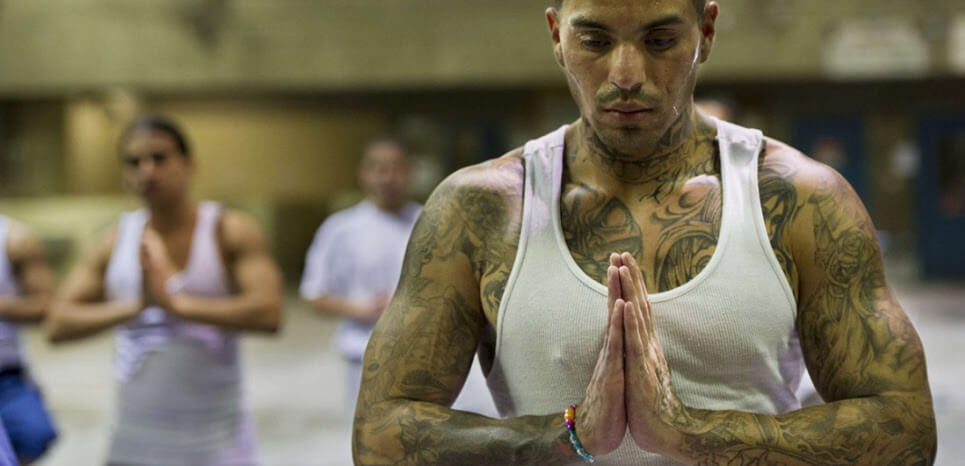
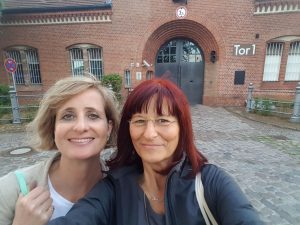
We are pleased to announce that Marie-Christine Heuell and Anke Aust have been active in Germany’s largest closed-door men’s prison with increased security for half a year.
After 1.5 years of preparation (that’s how long it takes on average to get into jail), they gave the first Prison SMART course for 21 lifelongers last August at Tegel Prison. And with great success! The participants were very attentive, open and got involved in the exercises. There was only positive feedback from the detainees, and one lifelong person said, “I really enjoyed the course and I am very satisfied to have participated. I really got a glimpse into another world and now appreciate life, even breathing. The course helps because you get a different perspective, even a healthy
mindset, and a very clear and healthy attitude for life. “
The prison Tegel has the size of about 17 football fields and is divided into 6 subdivisions. It has about 950 detention places and about 800 employees. This year it will continue with follow-ups and courses in the prison Tegel and we wish Christine and Anke continued success!
Two articles about her work have appeared in “Der Lichtblick”. The bright spot is the largest prison newspaper in Germany and the only one in the world that is not censored. Both articles are written by editors of the journal:
1.) Page 64: Issue 3/2018
2.) Foreword and page 18/19: Issue 2/2018
|
|||||||||||||||||||||||||||
|
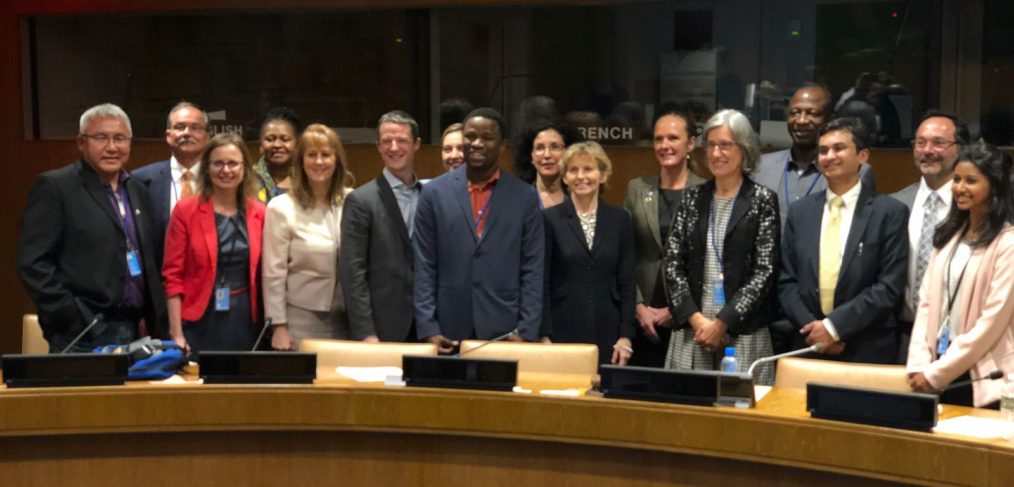

June 5, 2018 New York, NY
Clean, accessible water for all is an essential part of the world we want to live in. There is sufficient fresh water on the planet to achieve this. In the context of the Science, Technology and Innovation Forum for the Sustainable Development Goals (SDGs), this side event highlighted the contributions of the International Association for Human Values and of the UNESCO Man and the Biosphere (MAB) programme and its World Network of Biosphere Reserves (WNBR) in the implementation of these global goals. Biodiversity and water cut across all dimensions of sustainable development. Collective efforts to achieve SDG 6 (clean water and sanitation) and SDG 15 (life on land) would directly contribute towards the achievement of all other SDGs. UNESCO’s Lima Action Plan of the MAB Programme highlights the key role of biosphere reserves in implementing the Agenda 2030.
The event offered a platform for experts and audiences to discuss ways to share and learn from successful experiences in implementing SDG 6 and in reaching the most marginalized groups, often excluded from the benefits of development. The conversation also delved into MAB programme and its WNBR to contribute to formulate an overarching and compelling narrative to communicate effectively on the SDGs. Going forward, the MAB program would focus on the role of local and indigenous knowledge in biodiversity management to identify trends among local good practices.
The panel was chaired by Dr. Flavia Schlegel, Assistant Director–General for Natural Sciences, UNESCO. Panelists included, Dr. Ajay Tejasvi Narasimhan, Director for Leadership and Governance, Art of Living and the International Association for Human Values; Mr. Vongani Maringa, MAB South Africa, Department of Environmental Affairs; Mr. Jean Philippe Messier, Canadian Association for Biosphere Reserves Canada; Mr. Leonard Kenny, Tsa Tue Biosphere Reserve, Canada; and Dr. Didier Babin, Chair of the MAB International Cocoordinating Council (ICC). The discussions were moderated by Professor Inger Maren, from the University of Bergen, Norway.
Dr. Ajay Tejasvi set the tone of the conversation by stating, “The Art of Living and International Association for Human Values seek to strengthen society by strengthening individuals. Our programs build resilient communities that are capable of dealing with the effects of climate change. One major initiative is about involving local communities in the process of integrated river basin rejuvenation. Till date, we have worked across 4 states in India, working on rejuvenating 37 rivers and tributaries across 9 river basins. From the scientifically rigorous initial preparation to planning and implementation, local communities are involved in every step of the way. This ensures that capacity remains in the community, even after the experts leave. The involvement of communities means more citizen engagement thus strengthening grassroots democracy and reduces risks of conflicts.”
It was evident that multi-sectoral efforts are required to realize the promise of SDG6 and SDG15. Dr Flavia Schlegel rounded off the discussion by reaffirming that UNESCO has unique tools to support Member states in implementing the SDG’s in a holistic way: the UNESCO sites such as the 669 biosphere reserves, belonging to the World Network of Biosphere Reserves located in 120 countries, including 20 transboundary sites. This World Network is dedicated to share positive solutions and to inspire and engage other stakeholders to its vision. Experiences and stories shared by all speakers highlighted the central role of local communities, and particularly indigenous peoples, in the implementation and sustainability of the projects. Strengthening partnerships and meaningful participation is essential to achieve the implementation of the SDGs 6 and guaranteeing access to water for all. The World Network has produced one-minute videos #ProudToShare for people to understand how they can contribute to solutions and to changing the world by 2030, when the SDGs are fully achieved.